






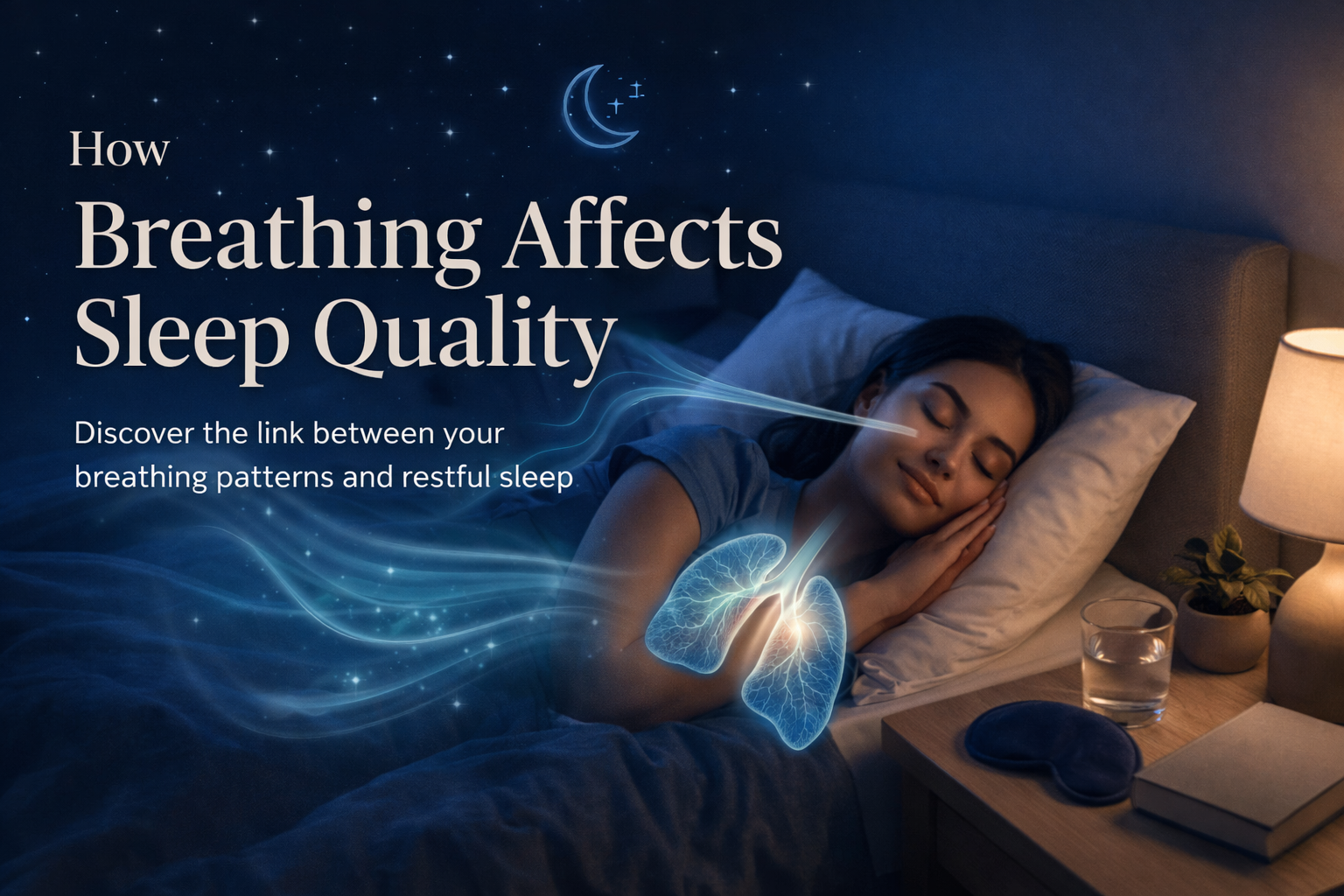
Breathing affects sleep quality more than most people realise. The way you breathe during the night directly impacts oxygen levels, sleep depth, and how refreshed you feel in the morning. Poor breathing habits can quietly disrupt your sleep cycle, while proper breathing can significantly improve your overall rest.
Why Breathing Matters for Sleep Quality
Breathing is one of the body’s most automatic functions, yet it plays a critical role in sleep.
When your breathing is efficient:
- Oxygen flows properly throughout the body
- Your heart rate stays stable
- Your body relaxes more easily
When breathing is disrupted, sleep quality suffers—even if you don’t fully wake up.
Oxygen and Recovery
During sleep, your body relies on oxygen to:
- Repair tissues
- Restore energy
- Support brain function
Shallow or inconsistent breathing limits these processes, leading to poorer recovery overnight.
Nasal Breathing vs Mouth Breathing
One of the biggest factors affecting sleep quality is how you breathe.
Nasal Breathing
Breathing through your nose:
- Filters and humidifies air
- Regulates airflow
- Supports deeper, more stable breathing
This type of breathing encourages the body to remain calm and relaxed.
Mouth Breathing
Mouth breathing can:
- Dry out airways
- Reduce oxygen efficiency
- Increase snoring
Over time, this can lead to disrupted sleep patterns and lower sleep quality.
How Poor Breathing Disrupts Sleep
Breathing issues don’t always wake you up fully—but they still impact your sleep cycles.
Interrupted Sleep Cycles
Even small breathing disruptions can prevent your body from reaching deep sleep consistently.
Reduced Deep Sleep
If your breathing is inefficient, your body struggles to stay in restorative sleep stages.
Increased Night-Time Wakefulness
Breathing discomfort can cause subtle awakenings throughout the night.
Snoring and Airflow Problems
Snoring is one of the most common signs of poor breathing during sleep.
What Causes Snoring?
Snoring often happens when airflow is restricted.
This can be due to:
- Mouth breathing
- Nasal blockage
- Poor sleeping position
Why Snoring Affects Sleep Quality
Snoring doesn’t just affect others—it affects you too.
It can:
- Disrupt deep sleep
- Reduce oxygen intake
- Lead to fatigue the next day
The Link Between Breathing and Relaxation
Your breathing pattern directly affects your nervous system.
Slow Breathing and Calmness
Slow, controlled breathing signals the body to relax.
Rapid Breathing and Stress
Fast or shallow breathing keeps your body in a more alert state.
How to Improve Breathing During Sleep
Improving your breathing doesn’t require complicated changes—small adjustments can make a big difference.
Encourage Nasal Breathing
Focus on breathing through your nose during the day and night.
Improve Airflow
Ensure your sleeping environment supports clear breathing:
- Clean air
- Comfortable temperature
- Minimal allergens
Optimise Your Sleeping Position
Your position can affect airflow.
Sleeping on your side often improves breathing compared to lying flat on your back.
Breathing and Sleep Environment
Your surroundings play a role in how well you breathe at night.
Air Quality
Clean air helps support better breathing.
Humidity Levels
Air that is too dry or too humid can affect airflow and comfort.
Temperature
A cooler room supports both breathing and sleep quality.
Modern Approaches to Better Breathing
As awareness of sleep quality has increased, more focus has been placed on breathing optimisation.
Many modern approaches focus on:
- Encouraging nasal breathing
- Supporting airflow
- Reducing disruptions during sleep
This is where innovative sleep-focused solutions, such as those developed by LONGEVITY, aim to improve breathing as part of a better sleep routine.
Signs Your Breathing May Be Affecting Your Sleep
You may not always notice breathing issues directly, but there are common signs.
Waking Up Tired
Even after a full night’s sleep, poor breathing can leave you feeling exhausted.
Dry Mouth or Throat
This is often a sign of mouth breathing during the night.
Snoring or Noisy Breathing
Frequent snoring may indicate airflow problems.
Difficulty Staying Asleep
Breathing disruptions can cause repeated awakenings.
Building Better Breathing Habits
Improving breathing takes consistency rather than drastic changes.
Start During the Day
Practise nasal breathing while awake—it often carries over into sleep.
Focus on Relaxation
Slow breathing before bed can help prepare your body for sleep.
Create a Supportive Environment
Make your bedroom a place that encourages calm, steady breathing.
How Breathing Fits Into a Better Sleep Routine
Breathing is just one part of a wider sleep system.
When combined with:
- A consistent routine
- A good environment
- Healthy habits
It becomes a powerful tool for improving sleep quality.
Final Thoughts
Breathing affects sleep quality in ways many people don’t realise. Small disruptions can prevent your body from reaching deep, restorative sleep, while proper breathing can significantly improve how you feel each day.
By focusing on simple changes—like encouraging nasal breathing and improving your sleep environment—you can take meaningful steps toward better sleep.
Where This Fits Into Your Sleep Strategy
Breathing is one piece of the bigger picture.
When combined with:
- Consistent sleep routines
- Proper nutrition
- A supportive environment
It helps create a complete system for better sleep and long-term wellbeing.